

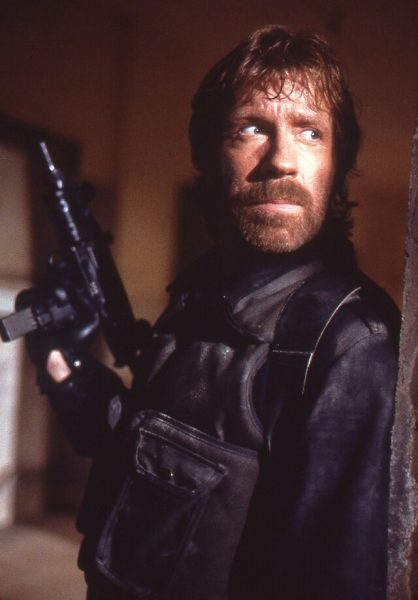
They say legacy outlives the body, and nobody that embodied that more than the “Walker, Texas Ranger” Chuck Norris.
News broke yesterday on the death of Chuck Norris which was later confirmed by his wife and surviving family.
Norris was made famous for his breakout role with fellow martial artist Bruce Lee in the 1972 film, “The Way of the Dragon.” This role saw Norris as the villainous Colt, a well-renowned American karate champion who is hired by a mob boss to fight Tang Lung (Bruce Lee.) This role would skyrocket Norris into the spotlight and help him gain some serious recognition and legitimacy with martial arts and film fans alike.
Unbeknownst to many, Chuck Norris’s influence on martial arts stretched far beyond the big screens he so often found himself featured in. Long before he could be found on film sets, he was oftentimes found in the dojos of South Korea where he was stationed during his time with the United States Air Force.
When Norris returned home to the United States, he immediately took everything he learned and opened his first karate studio in Torrance, California. Chuck’s studio seemed to blow up overnight, encouraging him to branch out and open a chain of highly successful karate schools throughout Southern California.
In an effort to add more legitimacy to his role as the instructor of these institutions, Chuck decided to sign himself up to compete for the 1968 major world karate championship, where he would go on to win his first championship. This event would mark the start to his six-year reign as the middleweight champion before he would go on to retire in 1974.
Norris would go on to help validate the sport of mixed martial arts as we know it today by introducing many of his students during the mid 1980’s to Gracie Jiu-Jitsu through classes taught under the famed Rorion Gracie at Chuck’s United Fighting Arts Federation conventions.
Chuck wasn’t just a Hollywood idol with flashy hands and scripted moves, but also one of the main driving forces behind helping make the glorious world of martial arts as popular and mainstream as it is today.
The team over here at the Roadrunner would like to say thank you Chuck, for everything you did because of your love for this amazing and long-overlooked sport. We hope you are up there training amongst the stars.