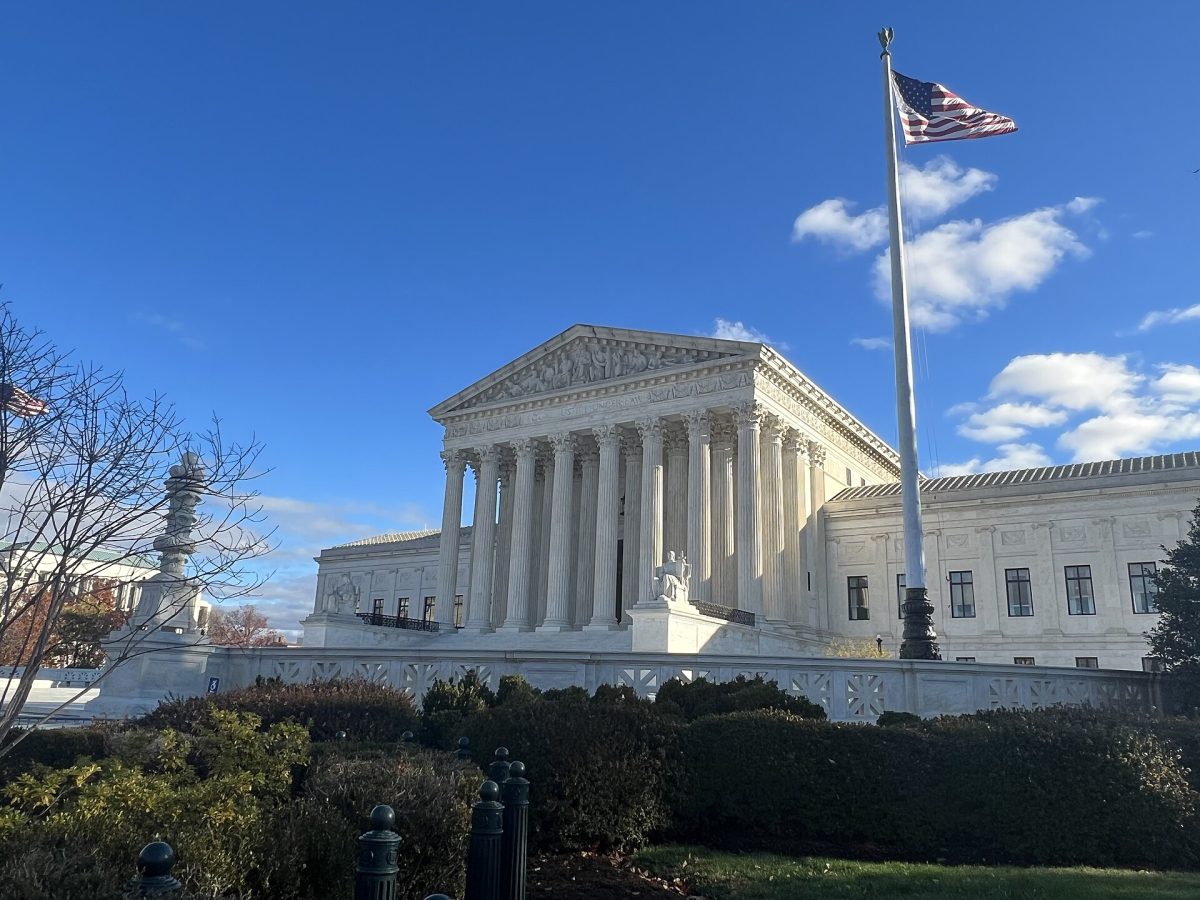


The Supreme Court heard arguments on April 1 in Washington, D.C., over President Donald Trump’s effort to restrict birthright citizenship. This case is in the wake of Trump’s 2025 executive order that directed federal agencies to deny the automatic citizenship of children born in the United States unless one or both parents are U.S. citizens.
This policy was swiftly challenged in court by numerous parties and blocked before it could take effect. Multiple states, as well as civil rights organizations, filed lawsuits arguing that Trump’s executive order violated the 14th Amendment, which guarantees citizenship to individuals born in the United States.
During oral arguments made on April, 1, 2026, the administration’s attorneys argued that the historical interpretations of the 14th Amendment do not account for modern-day immigration. However, several justices were reported to have questioned whether the president had the authority to reinterpret the Constitution through executive action rather than an amendment process.
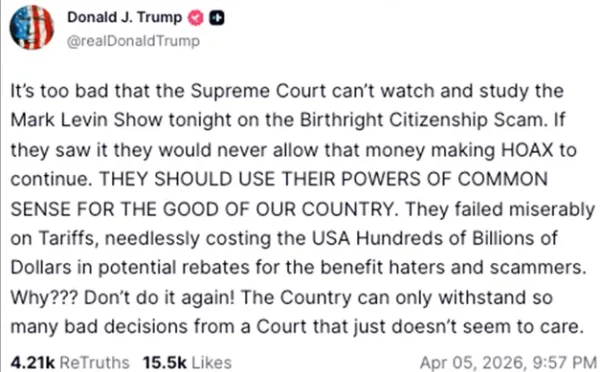
Following the hearing, Trump went on Truth Social to condemn the court’s skepticism, sharing, “The Country can only withstand so many bad decisions from a Court that just doesn’t seem to care.”
Trump attended these oral arguments on April 1, making him the first sitting president to attend a SCOTUS oral argument in person.
A decision is not expected until later this year, towards the end of the Court’s term. Whatever the outcome, the ruling is expected to influence the future of U.S. Immigration policy as well as the limits of presidential authority over interpreting the Constitution.