

There tends to be a lot of misunderstanding and misinformation regarding the Hmong community.
Many are ignorant to the extent of the sacrifices made by the Hmong people during the Vietnam War. “The Hmong Association of Washington” estimates that around 30,000 to 50,000 Hmong soldiers died fighting alongside their American cohorts during the conflict in Vietnam. It has also been estimated that over 90,000 Hmong civilians died under the Laos communist regime.
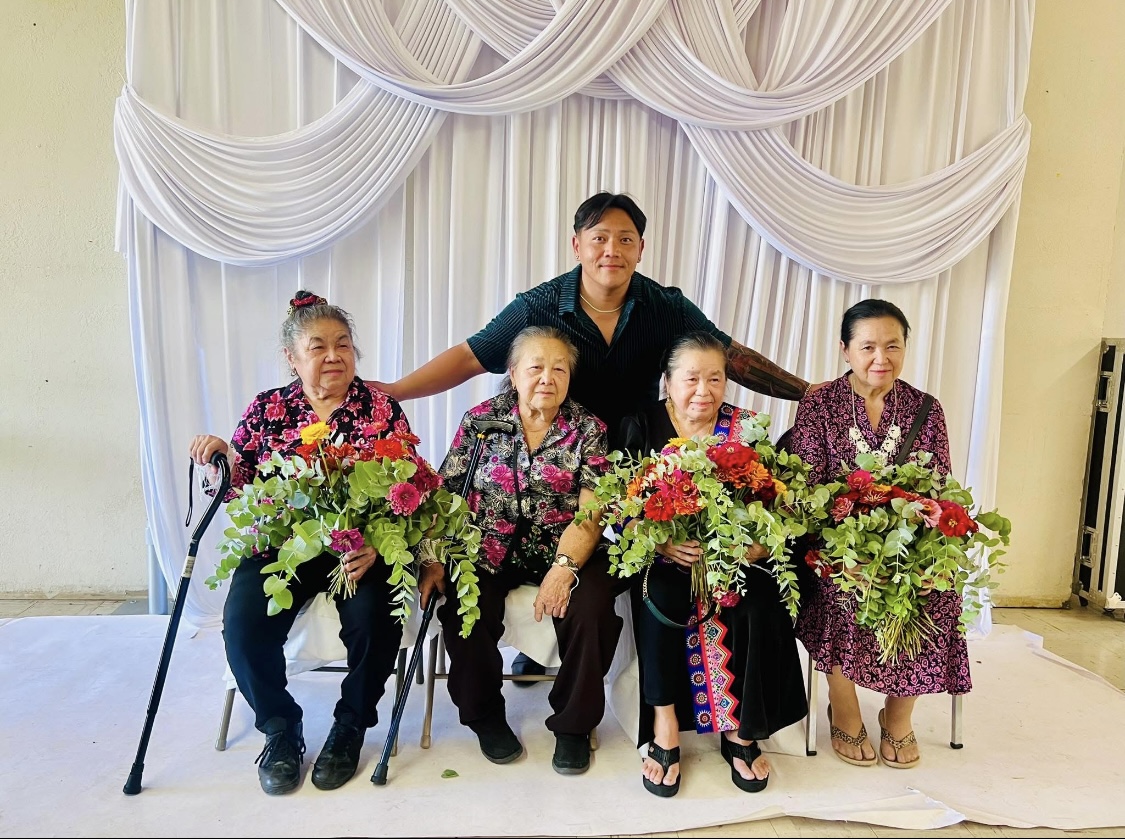
Tou Pha Xiong was one of around 30,000 first-generation Hmong immigrants who came to call California home during the end of the war. His father, Teng Xiong, was successful in both surviving the war and getting his family out of the country before they too found themselves victims under the Laos People’s Revolutionary Party (LPR) due to being deemed “enemies of the state.”
When asked about the struggles Tou’s father faced during the war, he had the following to say: “My parents found themselves fighting a war they never instigated, and at such a young age. I’m talking a full nomadic lifestyle during their preteens in order to escape the conflicts of the war. My parents would survive on anything they could find, from bamboo shoots, banana stems, wild yams, dead animals if they were fresh enough. Ultimately, my father and his family eventually found themselves with nowhere else to run, so he was left with no other choice than to take up arms against the lingering threat.”
After the fall of General Vang Pao’s army in May of 1975, which came as a direct result of the collapse of South Vietnam, Tou’s father found himself on the run with his family yet again, as the consequences of being caught by the Laos People’s Revolutionary Army would result in the execution of both him and those he loved.
Due to the fear of being caught, Tou’s parents couldn’t even start fires to keep themselves warm at night. He further stated that many would drug their children with opium to prevent them from waking up and crying in the middle of the night. “My father even told me about elders being left behind because they were unable to keep up.”
While it may be unfathomable for most to leave their loved ones behind in a time of need, many viewed it as a hard yet necessary sacrifice, including the elders themselves.
The Hmong lost so much more than the lives of the innocent to the war, as the migration to America now threatens to erase essential parts of their culture. Within only a few generations, many first- and second-generation Hmong have seen firsthand how practices and the Hmong language become less and less prevalent.
When pointing this observation out to Mr. Xiong, he simply nodded in agreement and said, “You see it more and more with every generation. The third and fourth generations can’t even speak their own language anymore, much of that is due to lack of practical use here. As English comes naturally, the Hmong language doesn’t due to the time and age that we are in. As a Hmong adult in his 30s, it does concern me a bit that some kids are not even interested in learning the language, which I find quite shameful.”
Which would lead some to wonder, what exactly are the Hmong people of today doing to combat this loss of culture?
“I speak Hmong to all my nieces and nephews as much as I can, especially when they are young, to try and preserve the language and culture as much as possible. I feel as though it is our role as adults to pass down our tradition and language to the next generation before it’s completely forgotten, just as our parents passed it down to us. However, there is a huge lack of translation that has made this extremely difficult.
“For example, we have little to no translations for anything involving the scientific or medical fields. My wife, being a medical assistant, finds it very difficult to communicate the exact medical prognoses to non-English-speaking Hmong. She must explain around the issues with the limited Hmong vocabulary, which often leads to miscommunication and misunderstandings. The Hmong language is also very limited, with there being no words for things like gym, marathon, rodeo, rhythm, festival, holidays, and even certain colors.”
When asked why he feels as though his native language is lacking these things, this was his response: “From my point of view, I think it has to do with us not ever having a country to call our own. This prevented us from ever being able to set up an education system centered around the Hmong language and culture, so our development stalled, and we never really had the chance to advance our language past what our past generations grew up around.
“Hmong people that grow up in different countries substitute their dialect with the ones they live in. This allows them to make up for the words in our language that are missing. For instance, when I went to Vietnam, my guide, who was also Hmong but had grown up there, would use Vietnamese filler words when describing the things our language lacked the vocabulary for. So, I found myself having to stop him frequently to ask him what he meant. I had this same experience with my guides in Thailand.”
“In my opinion, though, both groups spoke Hmong well and continued to practice traditions from the old times. Maybe that’s because growing up in an Asian-majority country, there is this preconceived notion about spirituality that draws them closer to our religious practices. America, however, has had the exact opposite effect. Tradition was basically handed over for a more modern and American lifestyle. I can’t put blame on my people, though, because America is expensive, and my folks and many others found out quick that tradition doesn’t pay your bills.”
The struggle of choosing between a more traditional lifestyle and that of a modern American one has done almost as much damage as the war to the Hmong culture. Some practices and words have already been lost to the Western influence of today. The culture of old is like an intricate puzzle, and people at its forefront, like Tou Pha, are doing everything they can to put it back together.