

Many are unaware of the destructive existence of the invasive hammerhead worm in California.
According to the United States Department Of Agriculture the worm was thought to have been introduced into the States around 1891 through landscaping materials imported from southeast Asia.
Scientists believe hammerhead worms arrived in California through imported potted plants in the early 1900’s. Zoologist Libbie Hyman first reported on the presence of hammerhead worms in California in 1943.
Francisco Antonio Saavedra Jr., known by his Yurok name CHPEGI (“Osprey”), is a federally enrolled member of the Pit River Tribe, with Yurok and El Salvadorian ancestry.
He is currently pursuing a degree in Tribal Forestry and Natural Resources at Cal Poly Humboldt, building on a strong academic foundation from the College of the Redwoods. His studies and work are deeply oriented toward ecosystem restoration and the integration of traditional ecological knowledge with modern conservation practices.
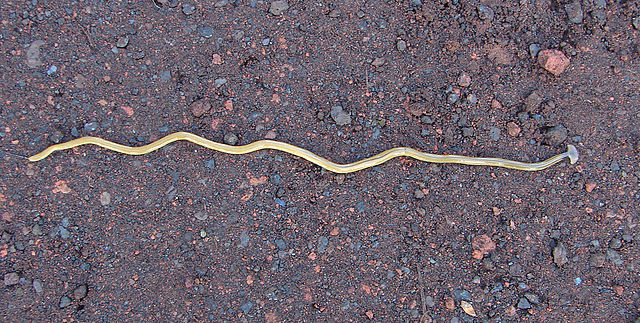
“If you’ve never seen a hammerhead flatworm, picture a hammerhead shark, now shrink it down and give it the body of a worm. That’s exactly what it looks like. Unfortunately, these flatworms are more of a threat to our environment than sharks are to us.”
They are an invasive species that prey on earthworms, the very creatures that keep our soil healthy by breaking down detritus and cycling nutrients. Earthworms aerate and enrich the soil, helping our crops, gardens, and forests stay healthy.
“When hammerhead flatworms feed on them, they throw off that natural balance and harm ecosystems. In California, these worms are a threat because they eat native earthworms that aerate and fertilize our soil.”
As an invasive species, hammerhead flatworms have no natural predators in the United States, allowing their populations to grow unchecked. There are currently five invasive species of hammerhead worms present in the U.S., with at least one confirmed in California.
“Their flat bodies let them squeeze into tight spaces, and they produce toxic chemicals that can make animals like chickens, dogs, and cats sick if eaten. There have even been reports of dogs vomiting up live flatworms after ingesting them, a clear sign of how resilient these pests are.”
What should someone do if they find one of these worms?
“If you spot one don’t try to chop it up!”
(Think of Hercules fighting the Hydra, every head he cuts off just grows back.) These worms can clone themselves and regenerate from small pieces. They even reproduce without a mate, FREAKY.
The best way to dispose of a hammerhead flatworm is simple. Place it in a sealed container or Ziplock bag with salt, make sure it’s sealed tightly because they can squeeze through small gaps. Then simply throw the sealed, salted bag in the trash. This prevents them from escaping and preying on more earthworms.
“Hopefully, the information I shared today raises awareness about how invasive species harm our ecosystems. Many are introduced through agriculture or horticulture. Even gardening shops sometimes sell “beneficial insects,” like certain non-native praying mantis species, that outcompete local native mantises. Sometimes they are unaware, or there’s little to no overcite on insects. In my opinion there is not enough news or focus on invasive bugs.”
The problem is that the proliferation of any species without natural checks and balances disrupts nature’s harmony. A species becomes invasive when it interferes with the natural function of an ecosystem, dominating or suppressing what was once a balanced system.
Nature has a way of maintaining balance but when that balance is broken, it’s our responsibility to restore it.

(Arcata, Ca.) Nov, 8,2025. Photographer unknown.